Curate Your Corner of the Internet

Return to the old internet. No algorithms, no endless feeds–just a personal, customizable space built entirely by you.

Scroll for our process

The Theme

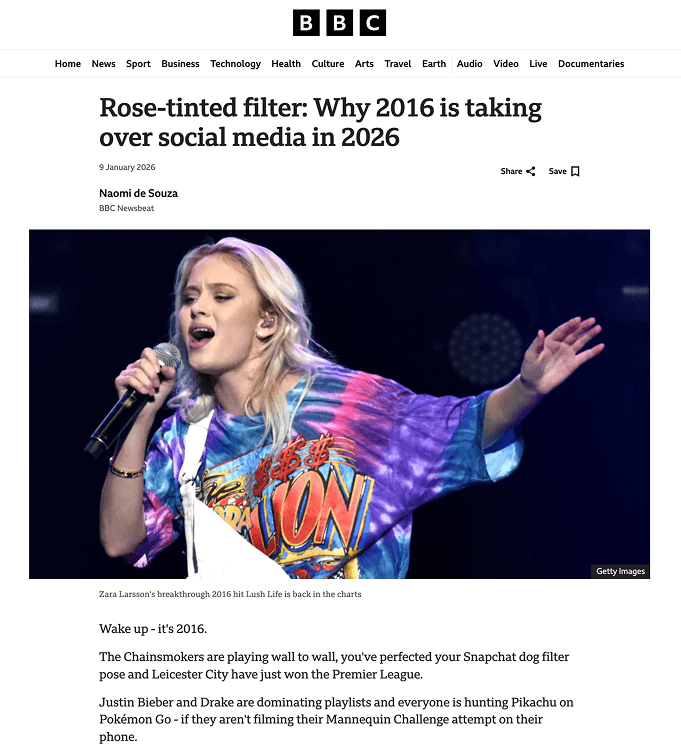
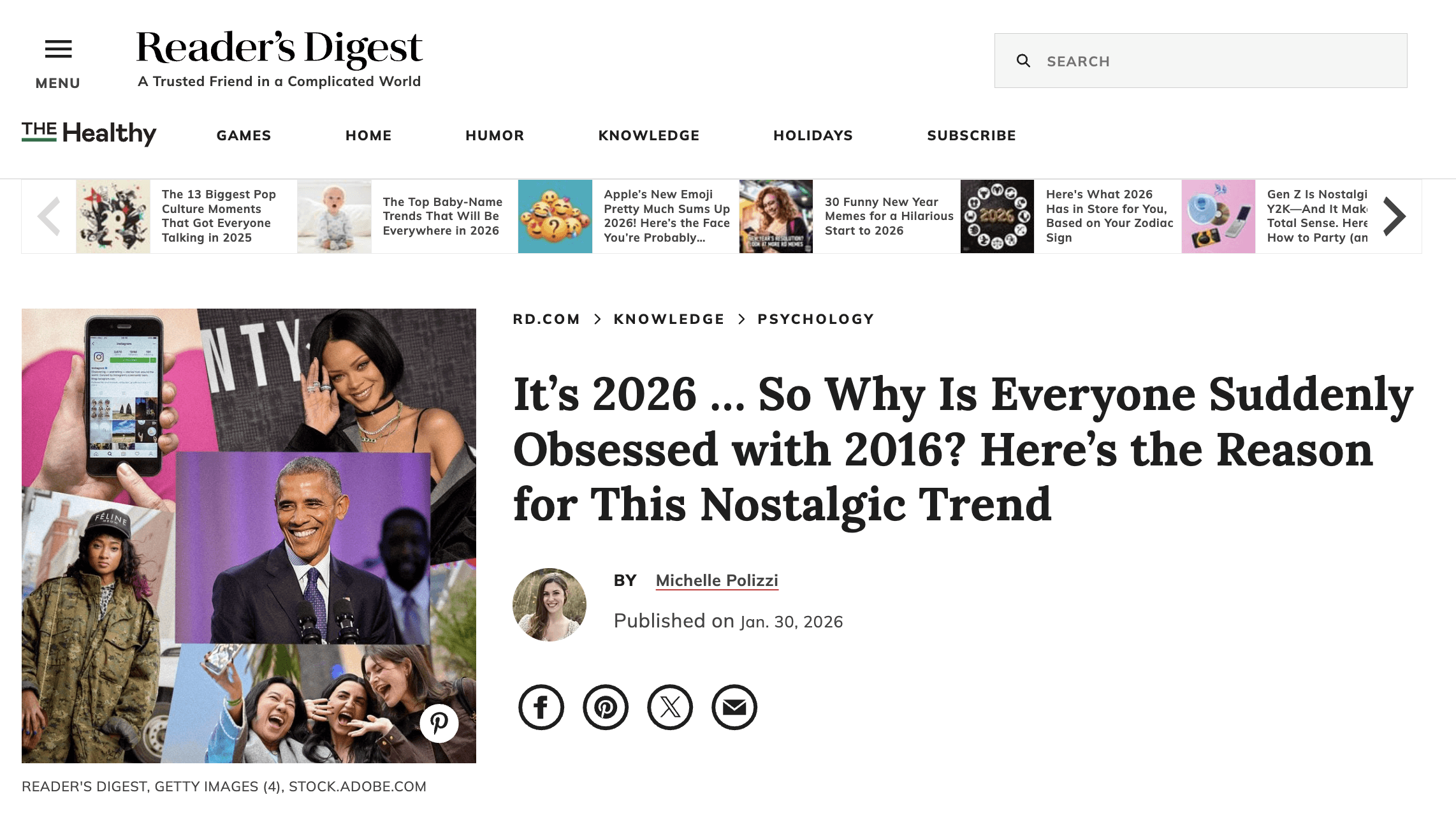
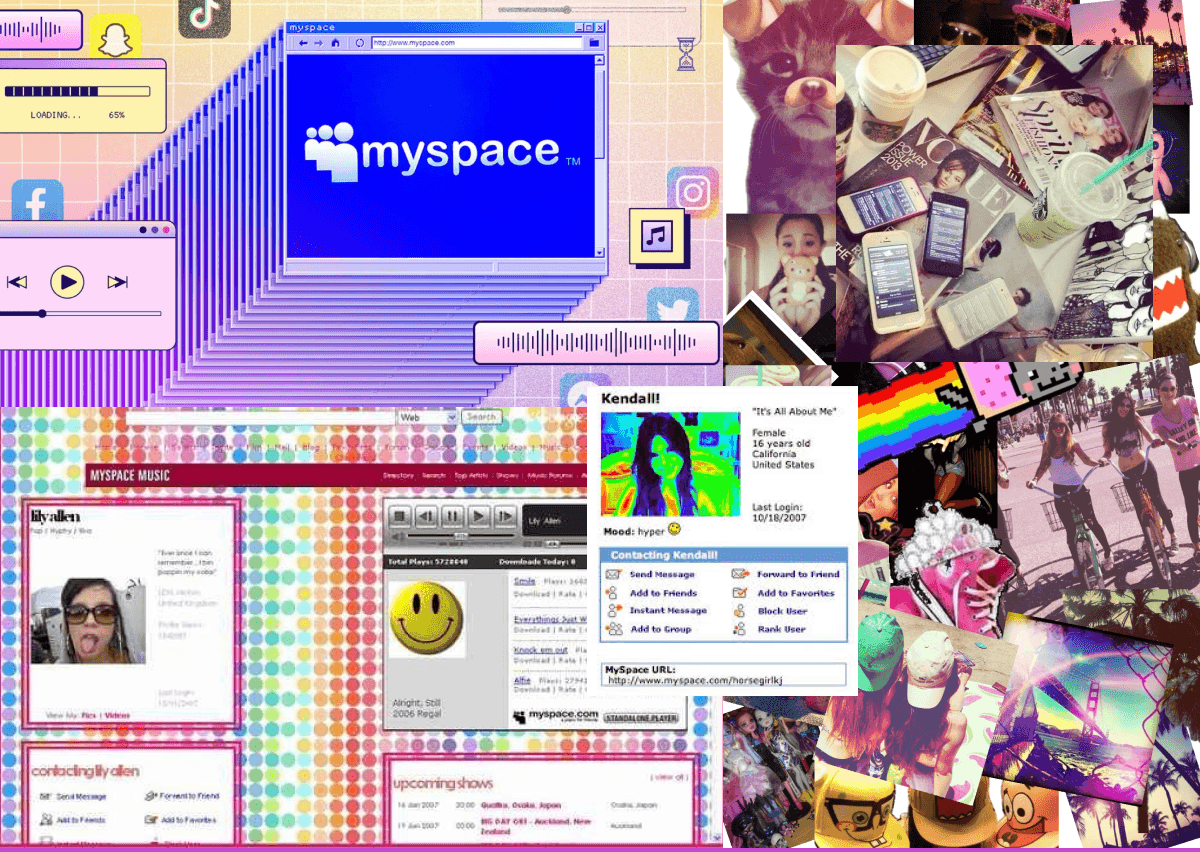
A Look Back Into 2016
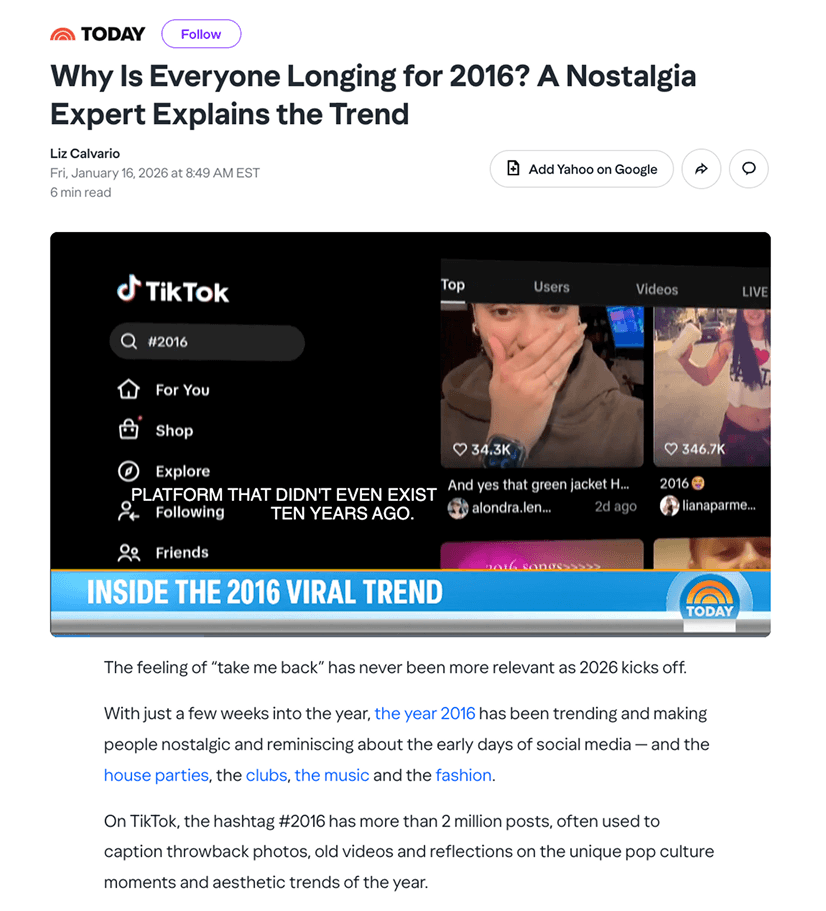
Why are we longing for 2016?

For older Gen Z and young Millennials, 2016 represents a cultural sweet spot—a time before the internet became hyper-optimized, monetized, and dictated by algorithms. Based on secondary research, we identified three core drivers behind this nostalgia:

Chronological Feed

Content was sequential and had a natural endpoint. There were less addictive personalized algorithms designed to induce infinite doomscrolling, making it easy to just log off.

Chronological Feed

Content was sequential and had a natural endpoint. There were less addictive personalized algorithms designed to induce infinite doomscrolling, making it easy to just log off.

Focused Interactions

Instead of offering a plethora of features, platforms like Instagram and Vine focused on simple interactions such as like, share, and repost, leading to more genuine, intentional connections.

Focused Interactions

Instead of offering a plethora of features, platforms like Instagram and Vine focused on simple interactions such as like, share, and repost, leading to more genuine, intentional connections.

Cultural Nostalgia

For people aged between 21 and 35, 2016 aligns with their most transformative young adult years. The aesthetics and mechanics of this era awakens a shared emotional resonance.

Cultural Nostalgia

For people aged between 21 and 35, 2016 aligns with their most transformative young adult years. The aesthetics and mechanics of this era awakens a shared emotional resonance.

User Research

User Research &
Problem Validation

To validate our assumptions about modern digital fatigue, we conducted a qualitative and quantitative survey with 16 participants within our target demographic (ages 17–26). Our goal was to understand their current social media habits, their emotional relationship with their profiles, and what they fundamentally feel is missing from the internet today.
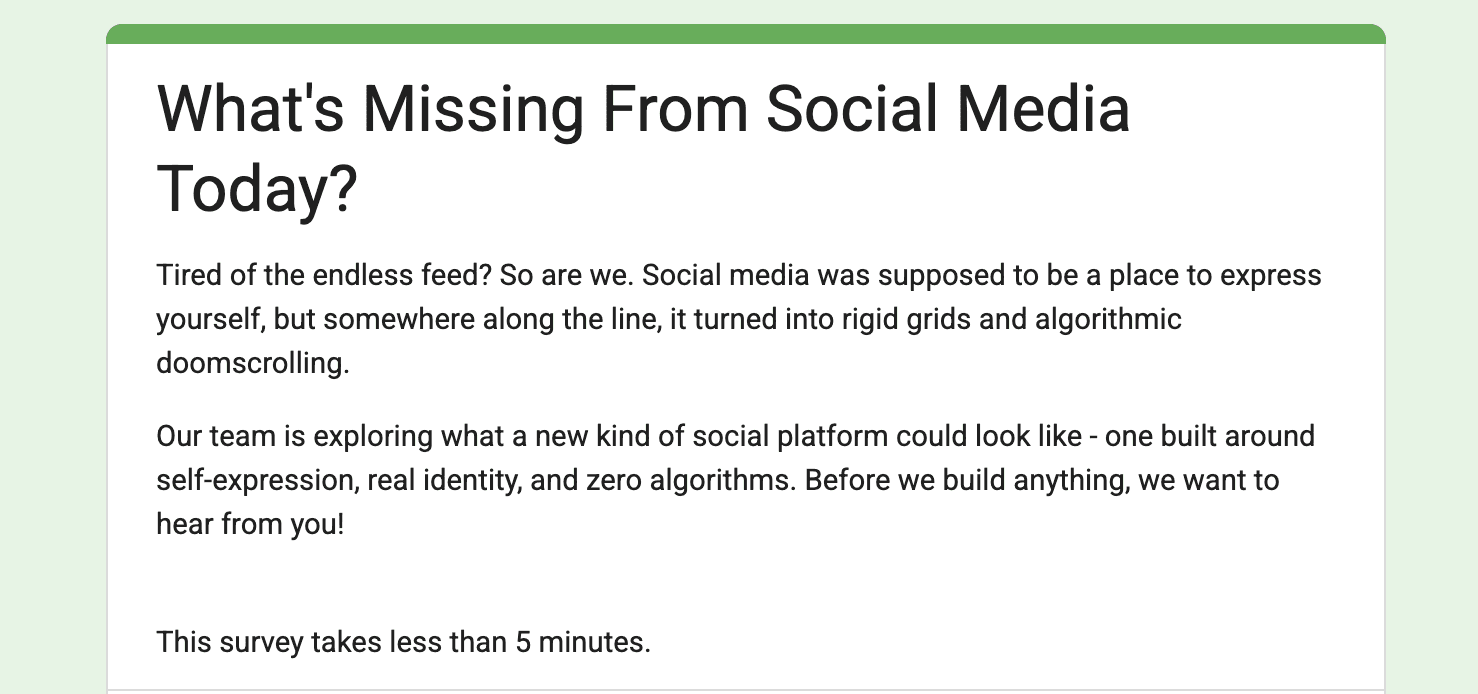
Key Findings

Users are trapped in passive, algorithmic consumption

Users are trapped in passive, algorithmic consumption

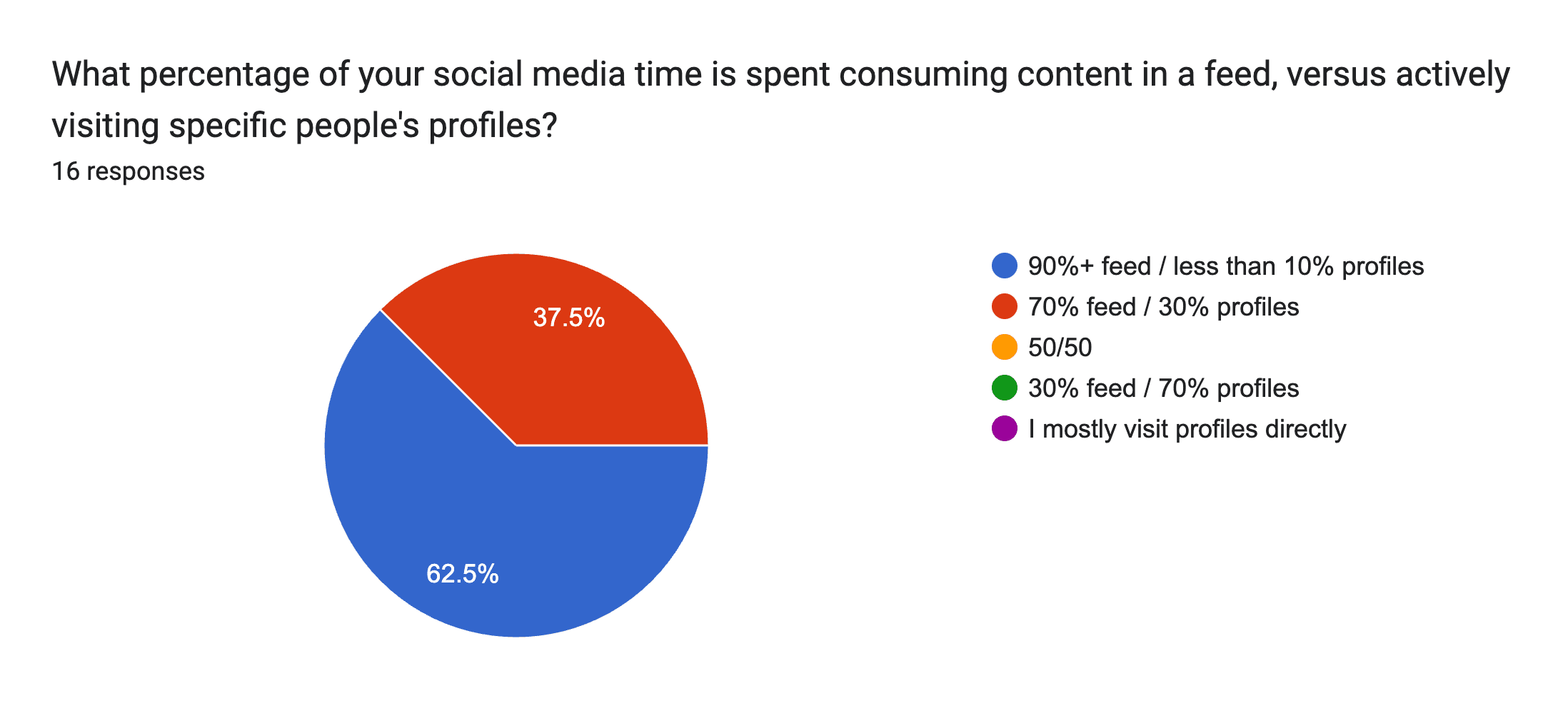
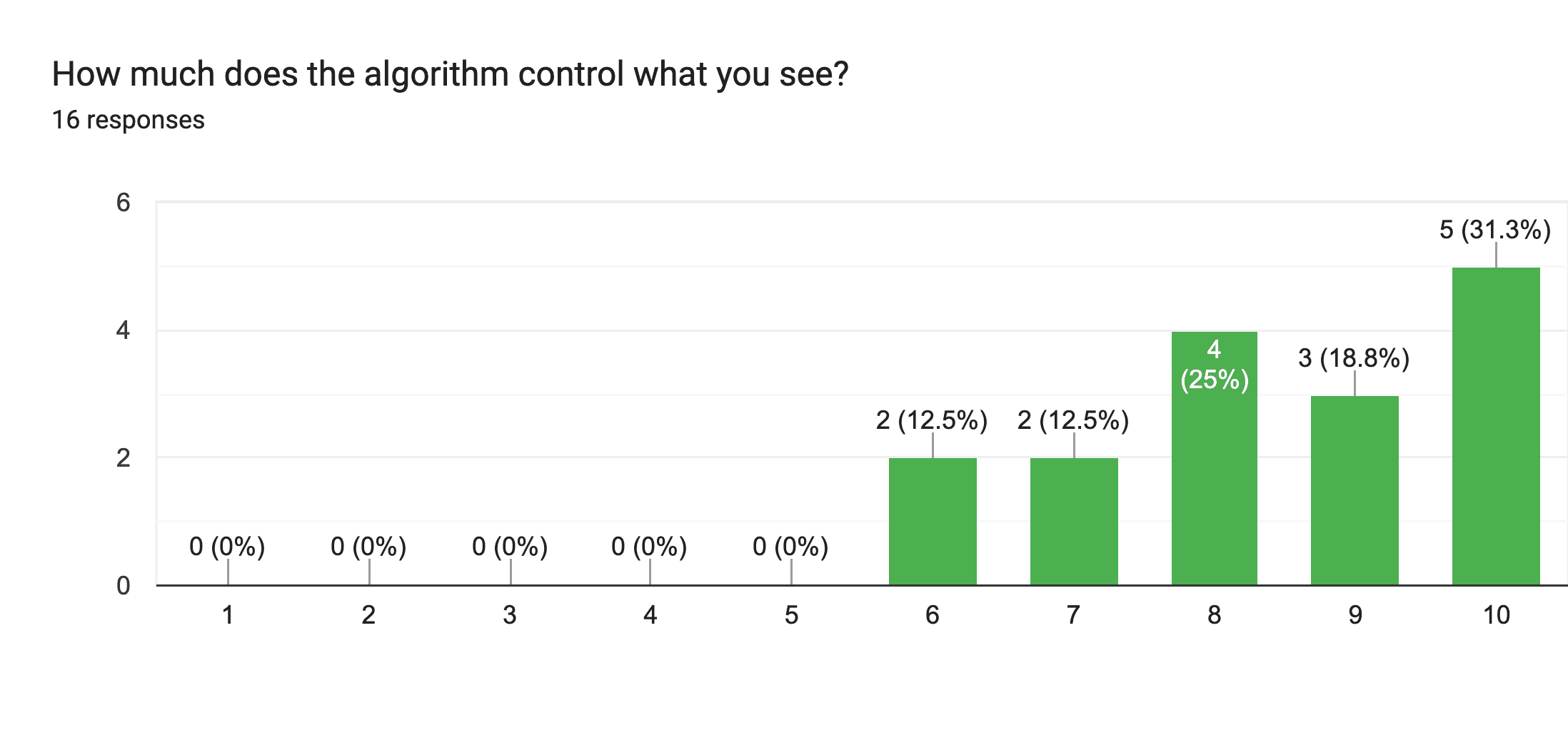
Modern social media has eliminated intentional browsing. Our data showed that 100% of users spend the majority of their time passively consuming a feed, with 62.5% estimating that feed consumption makes up 90%+ of their app usage. Furthermore, 75% of respondents rated their "Algorithm Fatigue" at an 8 out of 10 or higher.

Modern social media has eliminated intentional browsing. Our data showed that 100% of users spend the majority of their time passively consuming a feed, with 62.5% estimating that feed consumption makes up 90%+ of their app usage. Furthermore, 75% of respondents rated their "Algorithm Fatigue" at an 8 out of 10 or higher.

Q: What is missing from social media today that you wish existed?
"It's actually giving me too much. I need less. Less algorithm and doom scrolling."

"It's actually giving me too much. I need less. Less algorithm and doom scrolling."

"It's actually giving me too much. I need less. Less algorithm and doom scrolling."

"I think back to early Tumblr, when it was more about curating a vibe than curating an identity. It was a moment that felt like it was more about showing what you liked rather than presenting yourself as someone to be liked. It was a mood board of sorts. Lower stakes, less judgement."

"If I were to change it... it would be a studio apartment cluttered with trinkets. It's a mess honestly."

"I think back to early Tumblr, when it was more about curating a vibe than curating an identity. It was a moment that felt like it was more about showing what you liked rather than presenting yourself as someone to be liked. It was a mood board of sorts. Lower stakes, less judgement."

"If I were to change it... it would be a studio apartment cluttered with trinkets. It's a mess honestly."

Modern profiles feel like rigid, performative showrooms, not personal spaces.

Modern profiles feel like rigid, performative showrooms, not personal spaces.

Modern social platforms force users into identical grid systems. When asked to describe their profiles as a physical room, users used words like "gallery," "curated," and "external performatism."

Modern social platforms force users into identical grid systems. When asked to describe their profiles as a physical room, users used words like "gallery," "curated," and "external performatism."

Q: Describe a specific moment when you felt your social media presence truly represented who you are.

Q: If your social media profile were a physical room, what would it look like? , and what would you change about it to make it feel more like you?

Users are exhausted by hyper-monetized, consumer-driven platforms.

Users are exhausted by hyper-monetized, consumer-driven platforms.

Participants explicitly noted that the influx of influencers, ads, and algorithms pushing products has eroded genuine community. There is a deep desire for a return to a "demonetized" internet where connection, not commerce, is the primary focus.

Participants explicitly noted that the influx of influencers, ads, and algorithms pushing products has eroded genuine community. There is a deep desire for a return to a "demonetized" internet where connection, not commerce, is the primary focus.

Q: What is missing from social media today that you wish existed?
"Just more authenticity and more community. The internet feels too consumerist nowadays with influencer culture and ads everywhere. Everyone’s trying to sell you something."

"Demonetized content. Now everything feels sponsored... I miss the era where I could consume content without consuming goods."

"Just more authenticity and more community. The internet feels too consumerist nowadays with influencer culture and ads everywhere. Everyone’s trying to sell you something."

"Demonetized content. Now everything feels sponsored... I miss the era where I could consume content without consuming goods."

"Just more authenticity and more community. The internet feels too consumerist nowadays with influencer culture and ads everywhere. Everyone’s trying to sell you something."

"Demonetized content. Now everything feels sponsored... I miss the era where I could consume content without consuming goods."

User Research

User Personas

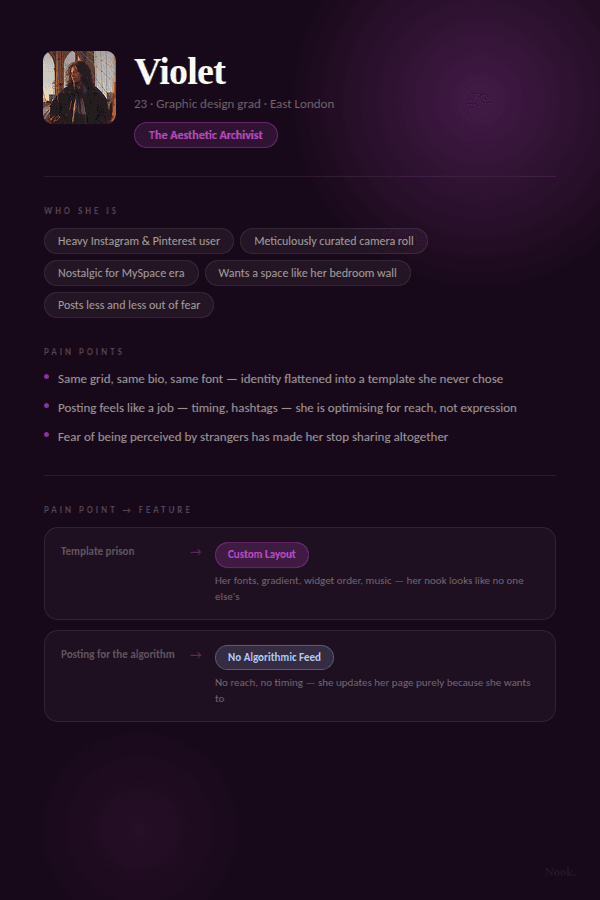
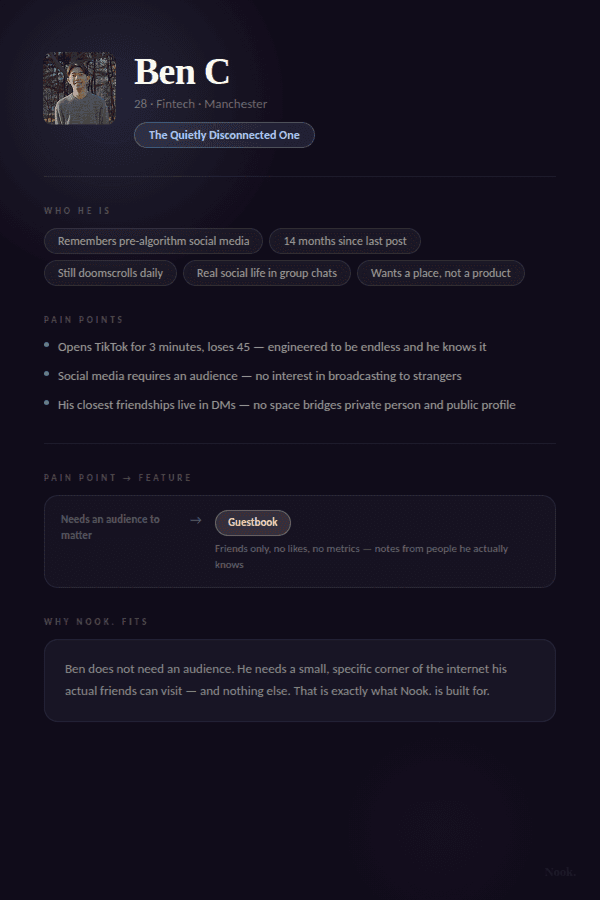
To ground our design decisions and transition from research to ideation, we summarized our findings into two distinct personas. They represent the two main target audience of our product.
Our Solution
Nook strips away the addictive mechanics of modern social media and replaces them with intentional, highly personal design. We built the platform around three core features designed to bring back the cozy, digital corner.

Nook strips away the addictive mechanics of modern social media and replaces them with intentional, highly personal design. We built the platform around three core features designed to bring back the cozy, digital corner.

Core Feature 1

Lack of Algorithmic Feed,
No More Doomscrolling

Lack of Algorithmic Feed, No More Doomscrolling

Solving for: Infinite Doomscrolling

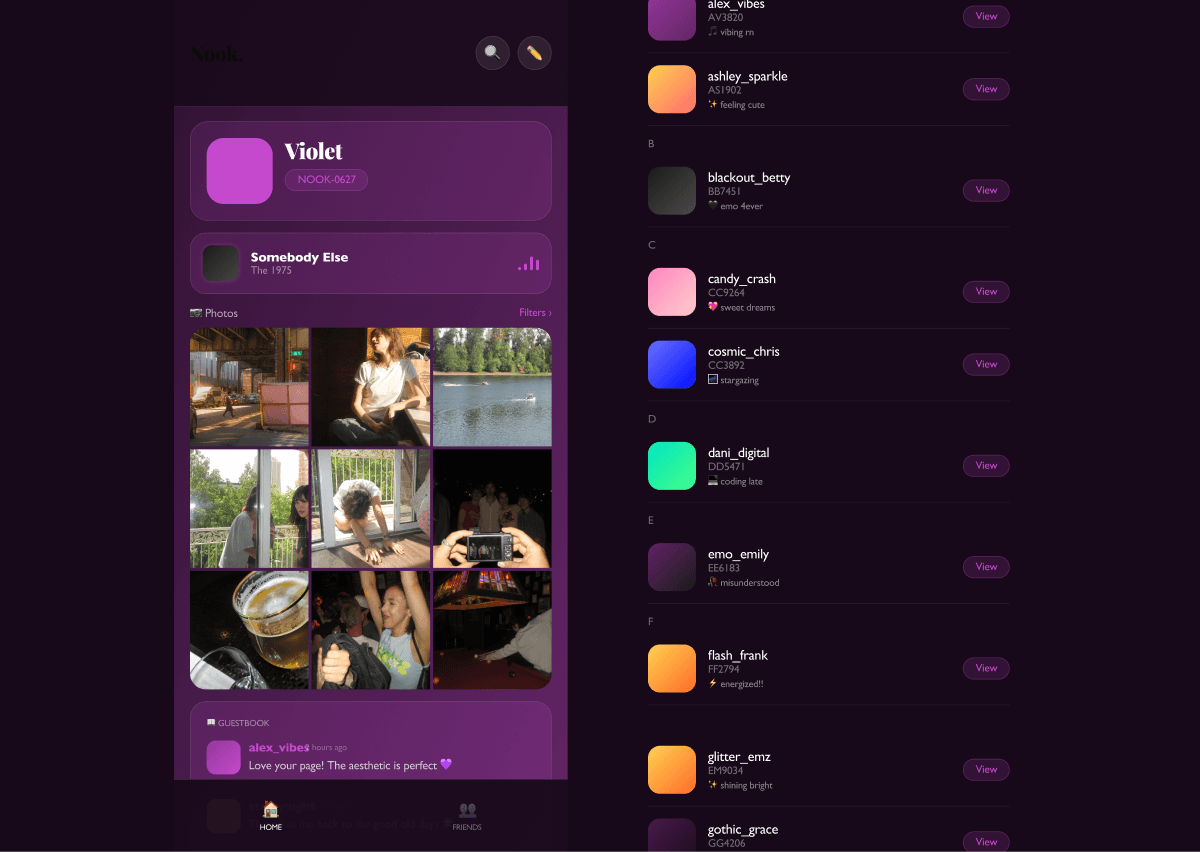
To eliminate passive consumption, Nook has absolutely no central algorithmic feed. You don’t scroll mindlessly, you visit pages with intention
Direct Profile Navigation

Users navigate the app by searching for friends or accessing their curated Friend List.

Direct Profile Navigation

Users navigate the app by searching for friends or accessing their curated Friend List.

Intentional Browsing

Because there is no personalized feed, every interaction is a conscious choice, dramatically reducing algorithmic fatigue and giving the platform a natural endpoint.

Intentional Browsing

Because there is no personalized feed, every interaction is a conscious choice, dramatically reducing algorithmic fatigue and giving the platform a natural endpoint.

Core Feature 2

Fully Customizable,
Drag-and-Drop Profile Builder

Solving for: Flattened Identity & Rigid Grids

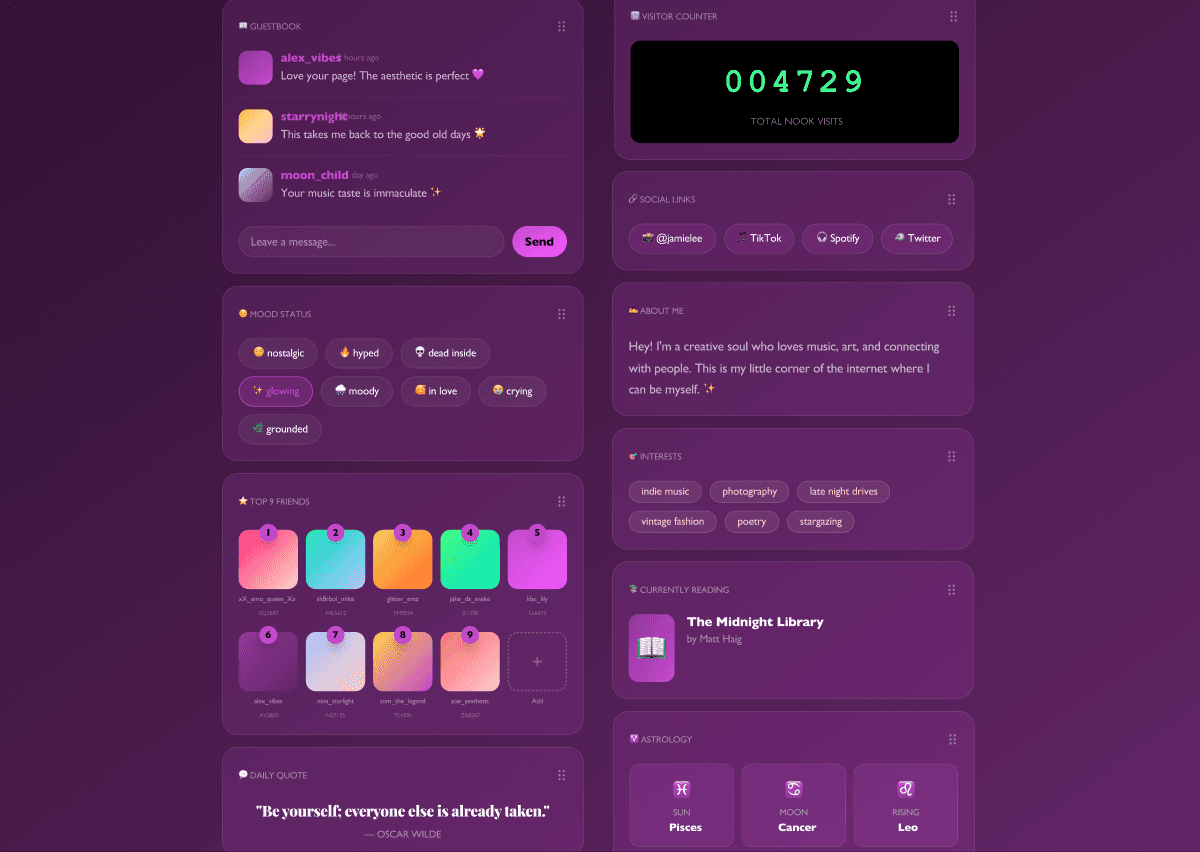
We replaced the standard photo grid with a blank canvas. Users have complete control over their digital space, making every profile a unique reflection of its owner.
Widget-Based Layouts

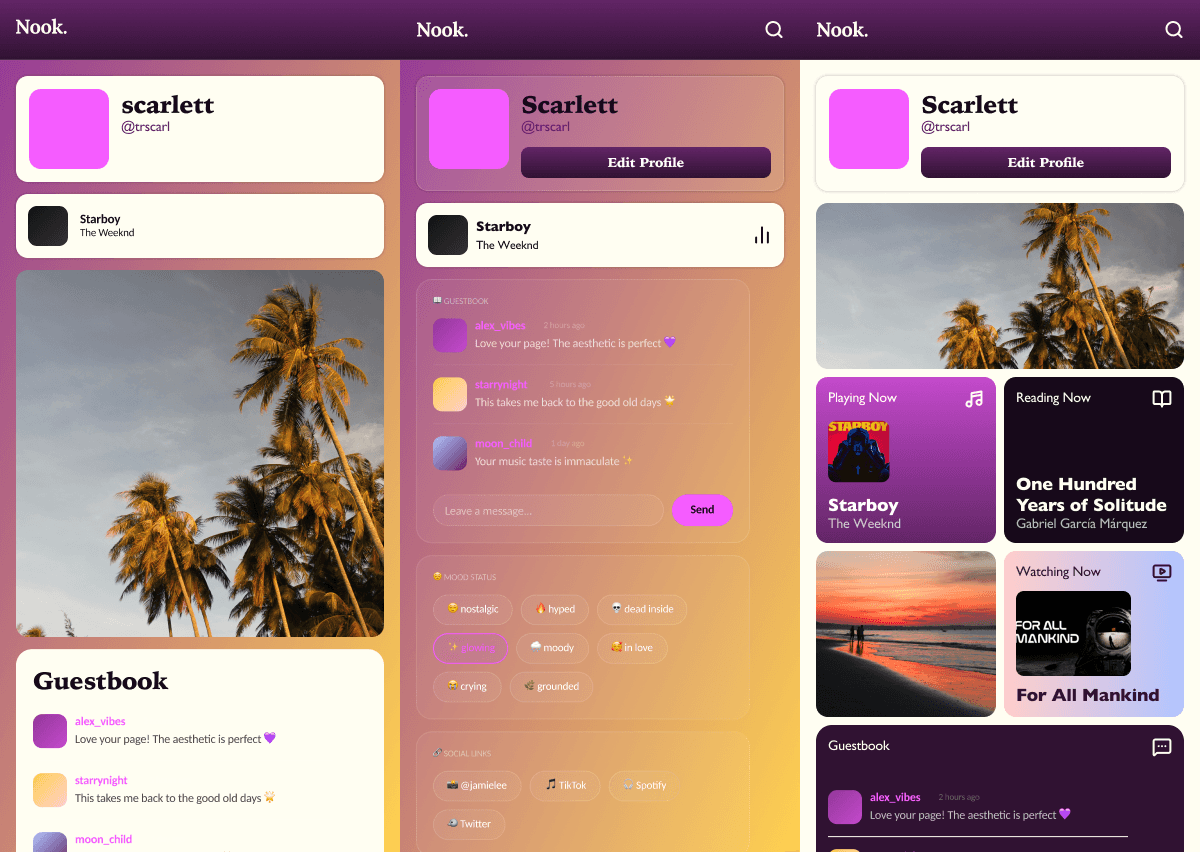
A seamless drag-and-drop interface allows users to place photos, text blocks, and links exactly where they want them.

Widget-Based Layouts

A seamless drag-and-drop interface allows users to place photos, text blocks, and links exactly where they want them.

Full Customization

Users can change background colors, select custom fonts, and completely alter the visual hierarchy of their page.

Full Customization

Users can change background colors, select custom fonts, and completely alter the visual hierarchy of their page.

Autoplay Soundtrack

Tapping into peak 2016 nostalgia, users can pin a song to their profile that plays upon a visitor's arrival, immediately setting the vibe of their nook.

Autoplay Soundtrack

Tapping into peak 2016 nostalgia, users can pin a song to their profile that plays upon a visitor's arrival, immediately setting the vibe of their nook.

Core Feature 3

The Friends-Only Guestbook

Solving for: Performative Metrics & Lack of Genuine Community

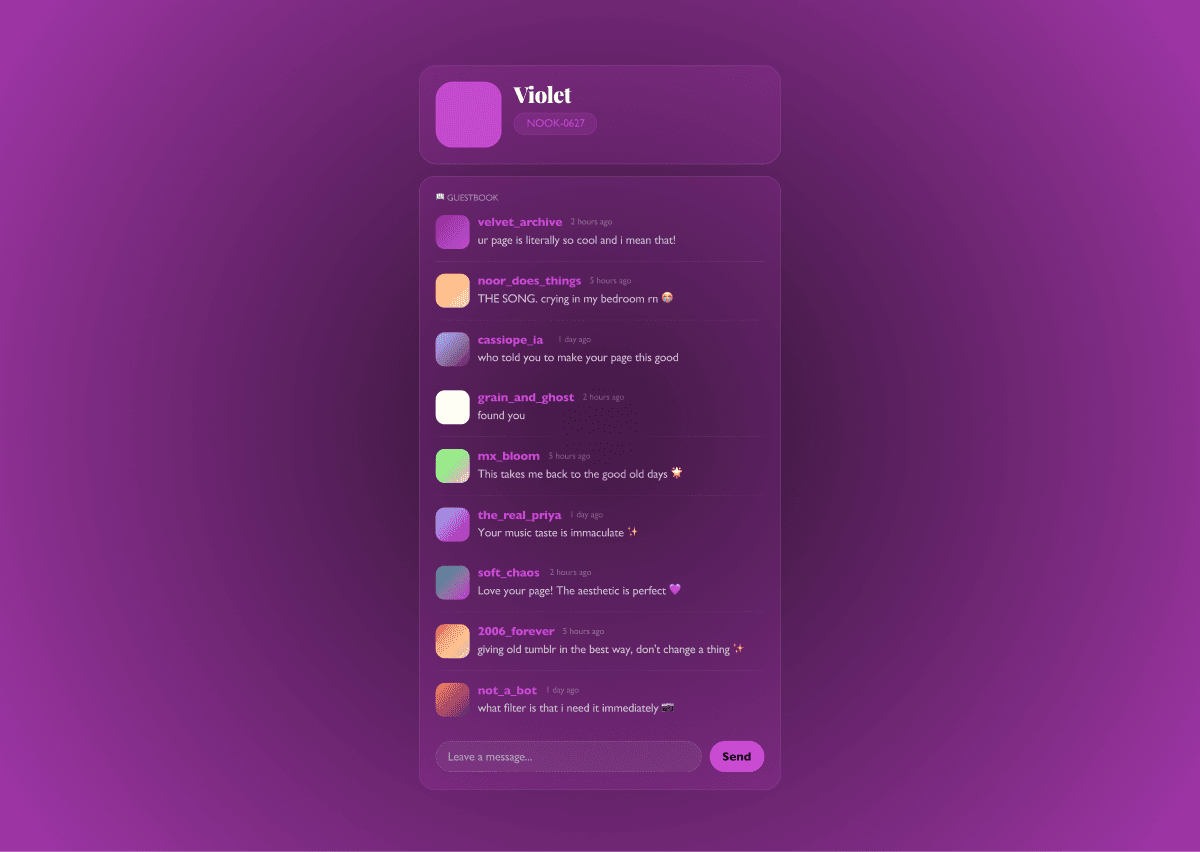
We stripped away public likes, view counts, and nested comment sections. Instead, we foster genuine, intentional interactions among friends.
Chronological Feed

The Guestbook is a chronological stream of notes left by visitors. It encourages casual "shitposting" and low-stakes interactions.

Chronological Feed

The Guestbook is a chronological stream of notes left by visitors. It encourages casual "shitposting" and low-stakes interactions.

Intimate Connection

Because profiles aren't pushed to a global algorithmic audience, the Guestbook remains a safe, localized space for actual friends to connect, free from the "fear of being perceived" by strangers.

Intimate Connection

Because profiles aren't pushed to a global algorithmic audience, the Guestbook remains a safe, localized space for actual friends to connect, free from the "fear of being perceived" by strangers.

Visual Design

Color Palette

Color Palette

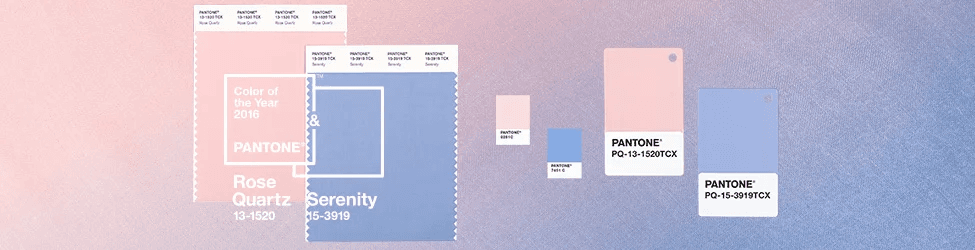
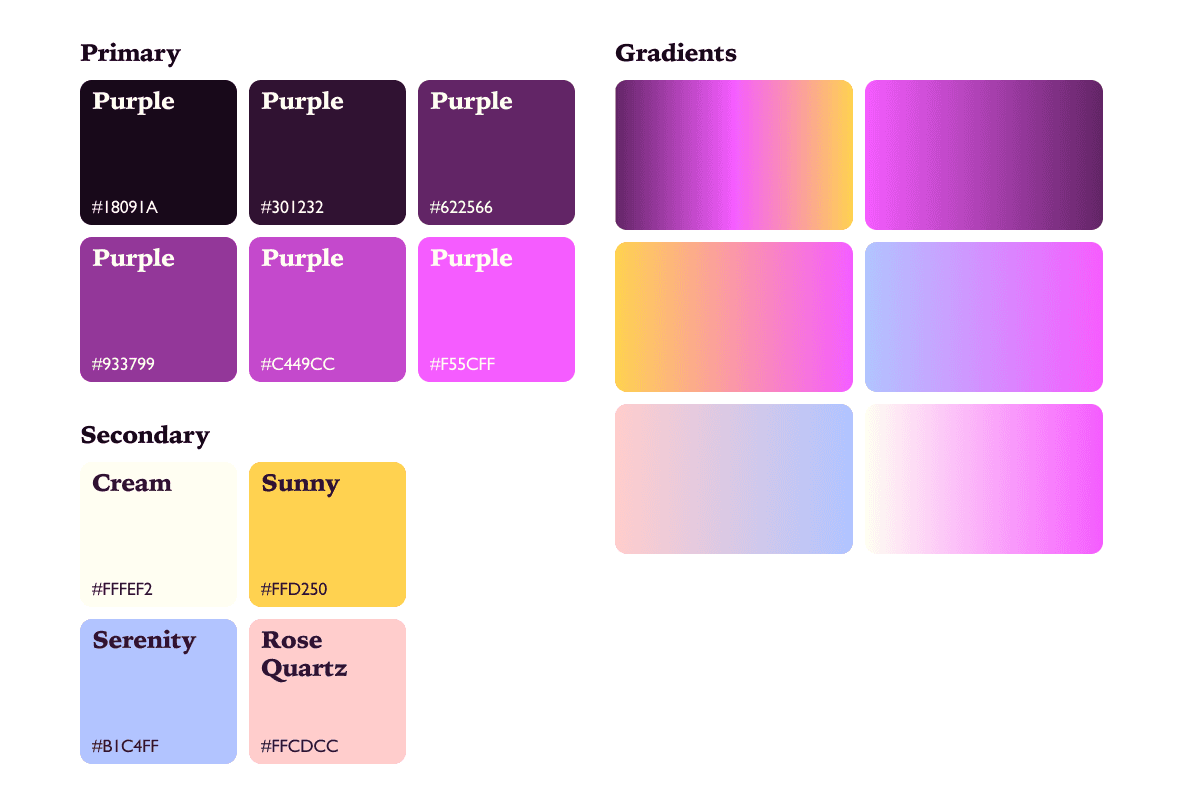
To evoke the distinct feel of the mid-2010s internet, we designed Nook’s visual identity in the era's defining palette. We paired the vibrant, electric purples synonymous with 2016 web culture with softer accents inspired by Pantone’s 2016 Colors of the Year (Rose Quartz and Serenity).

To evoke the distinct feel of the mid-2010s internet, we designed Nook’s visual identity in the era's defining palette. We paired the vibrant, electric purples synonymous with 2016 web culture with softer accents inspired by Pantone’s 2016 Colors of the Year (Rose Quartz and Serenity).

Visual Design

Typography

Typography

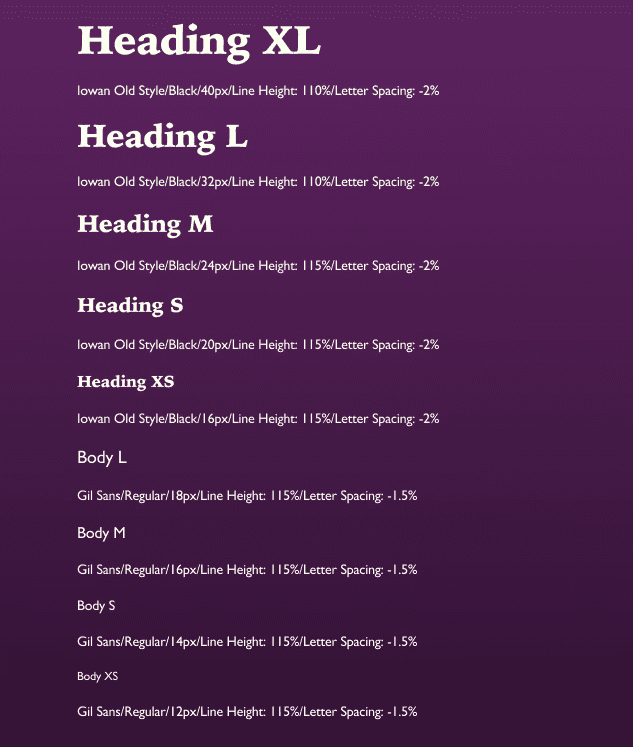
For typography, we deliberately stepped away from the sterile, minimalist sans-serifs of modern apps. Instead, we chose an editorial serif font reminiscent of early Tumblr.

For typography, we deliberately stepped away from the sterile, minimalist sans-serifs of modern apps. Instead, we chose an editorial serif font reminiscent of early Tumblr.

Process & Iterations

Our Process

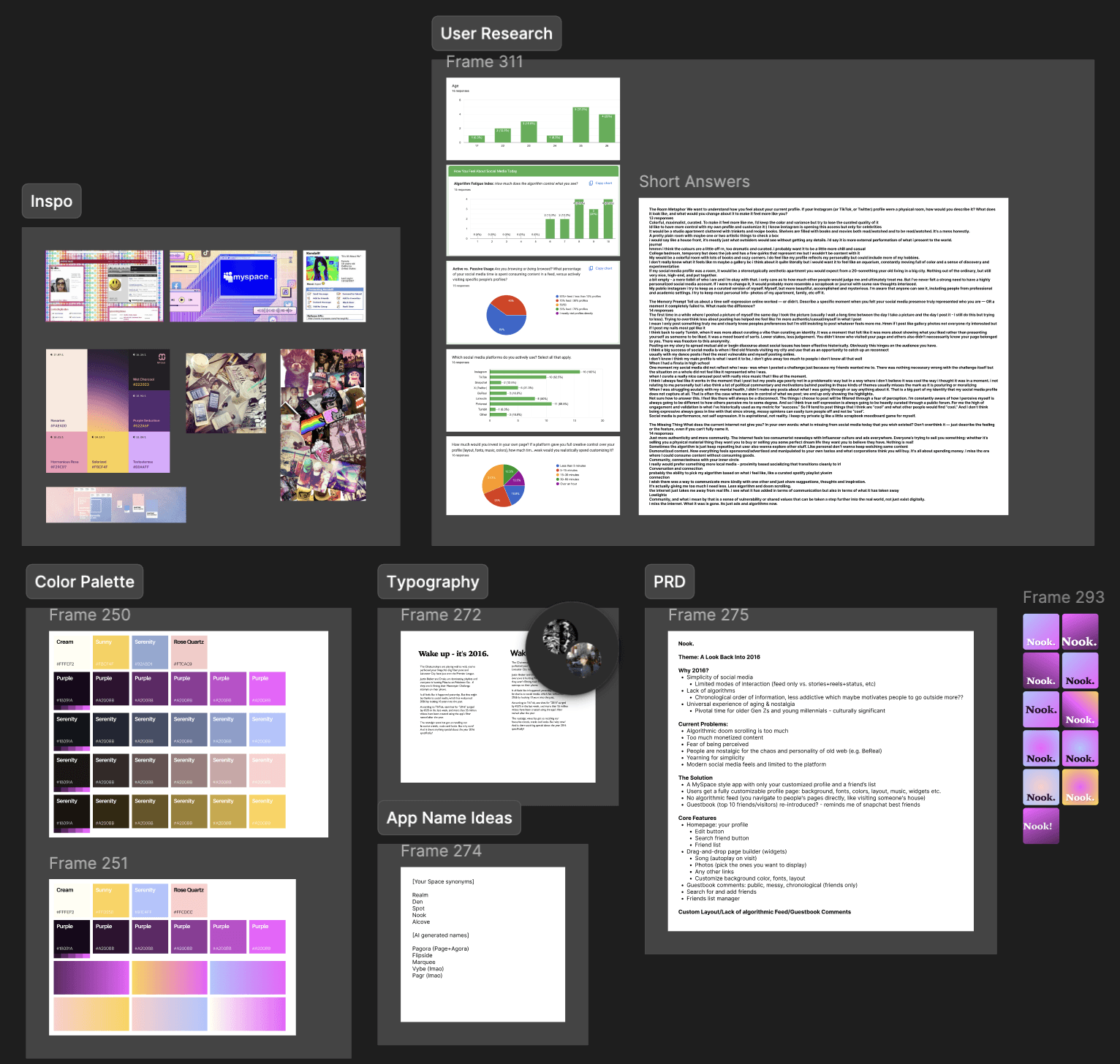
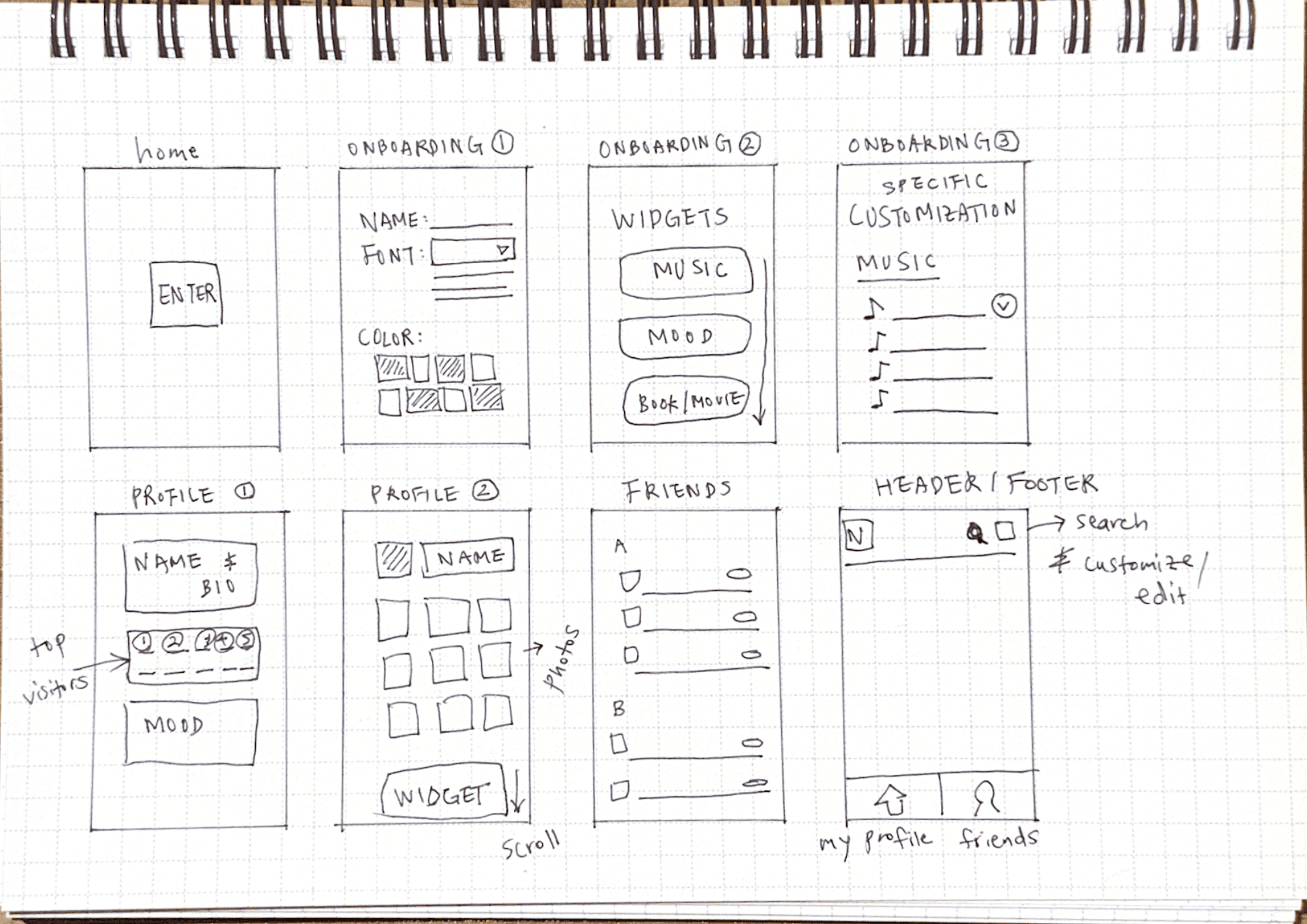
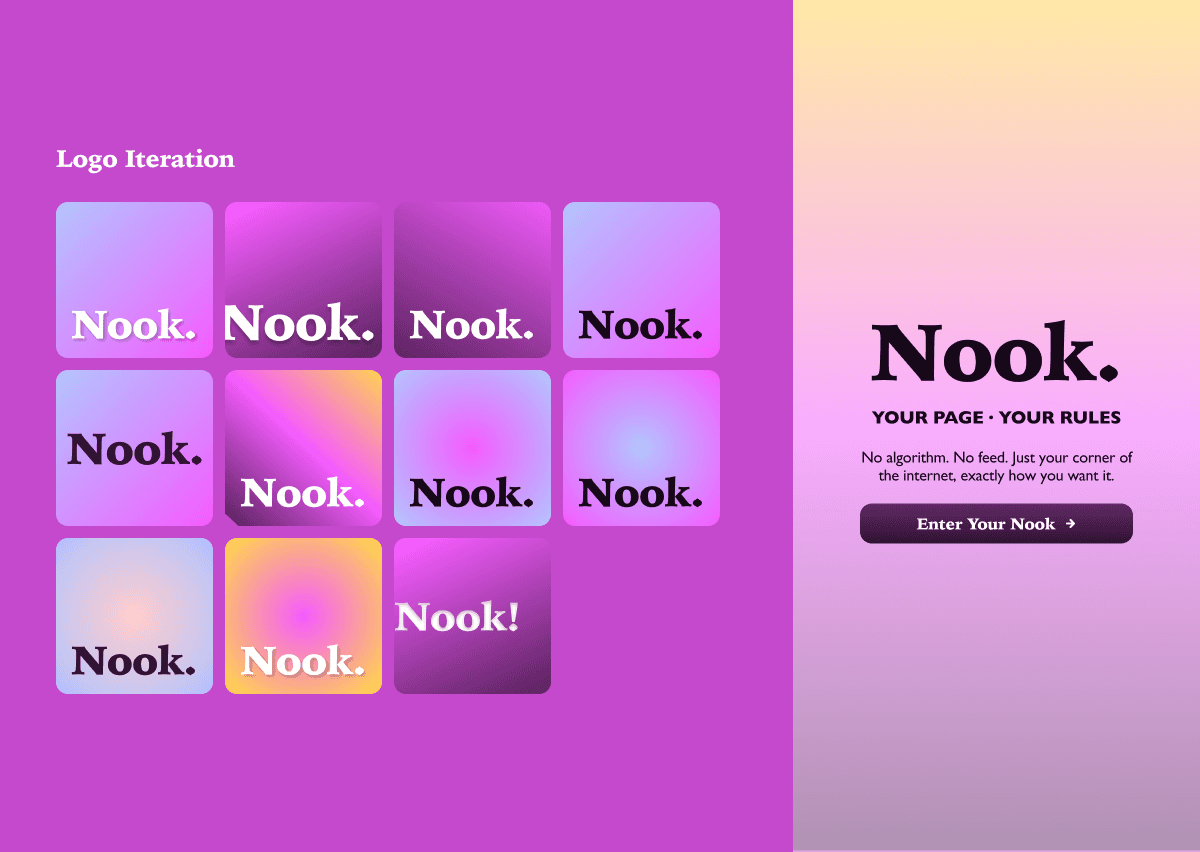
Given the time constraint, our design process was fast and highly focused. We prioritized translating our most impactful user research insights into a functional UI, ensuring a cohesive user flow without overcomplicating the MVP. Here are a few iterations that led to our final prototype.
Prototype Walkthrough

Go Through The Steps

Prototype Link

Create Your Own Nook.

Experience a real-time creation of your personalized Nook and all of our customizable features through our high-fidelity Figma prototype.

Your corner of the internet.


Nook.

Your corner of the internet.


Nook.

Your corner of the internet.


Nook.

Create a free website with Framer, the website builder loved by startups, designers and agencies.